Year-round LED lighting you control from your phone, with no ladders every November. Learn what holds up in desert heat, then compare quotes from independent local installers.


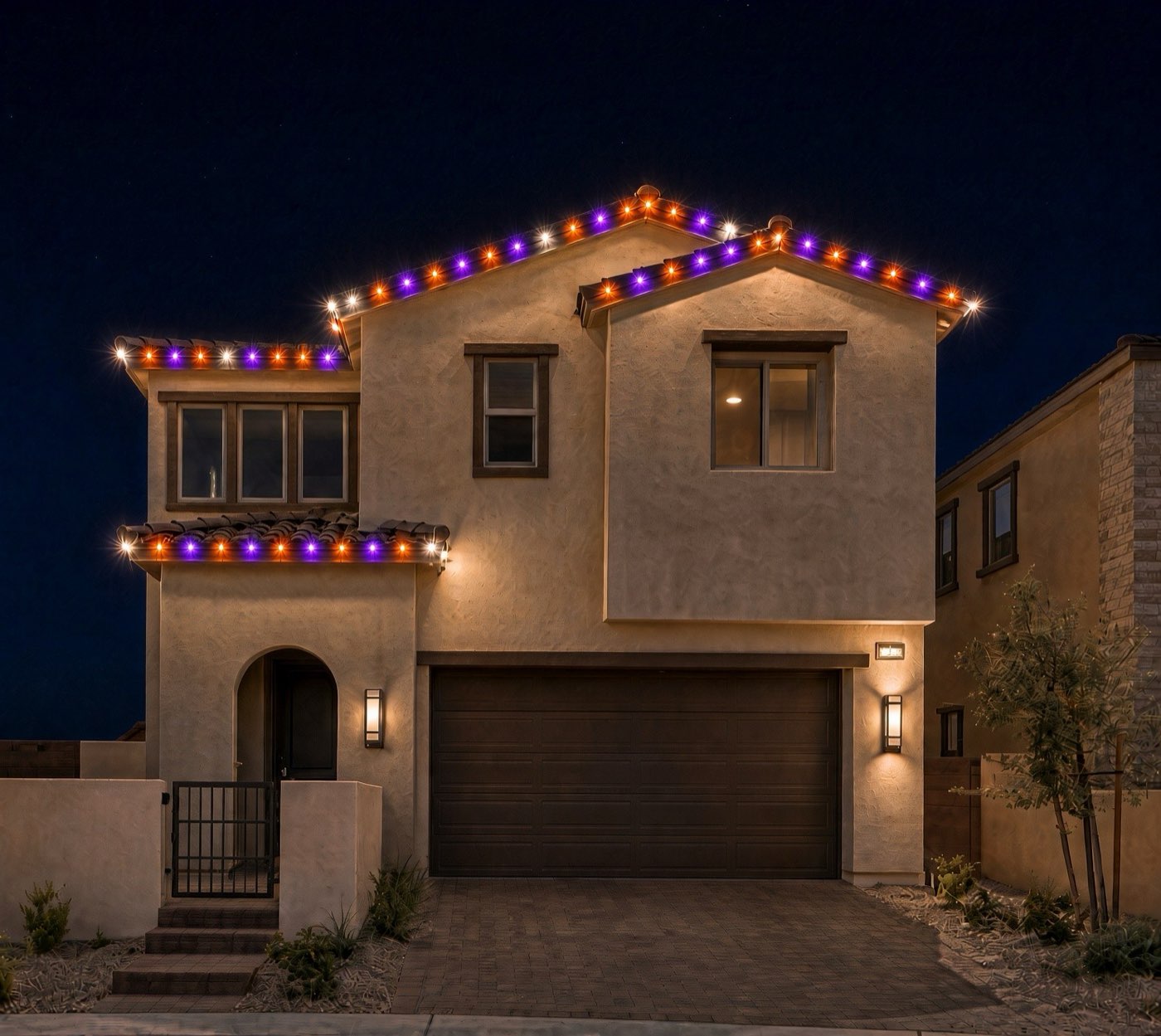
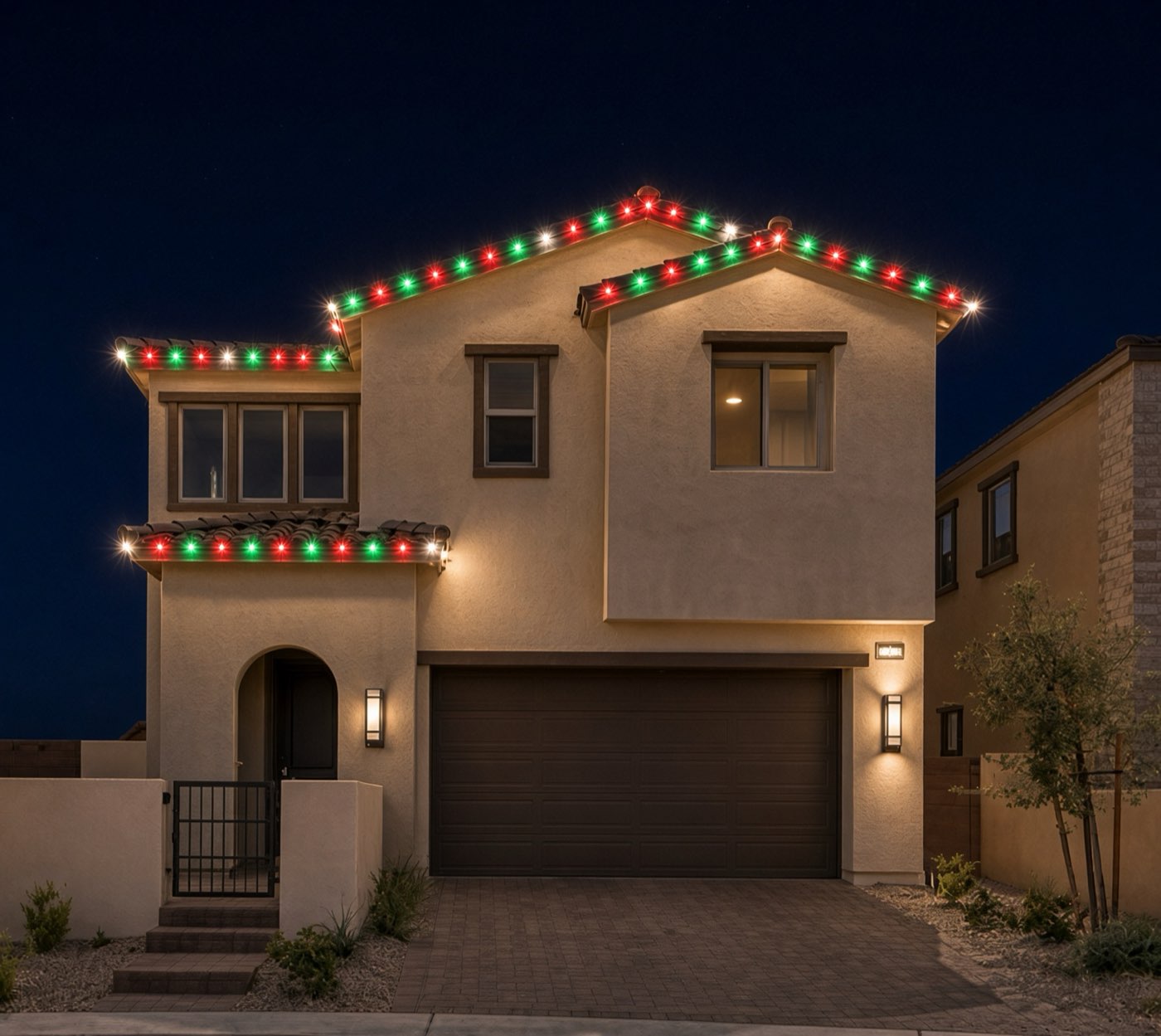
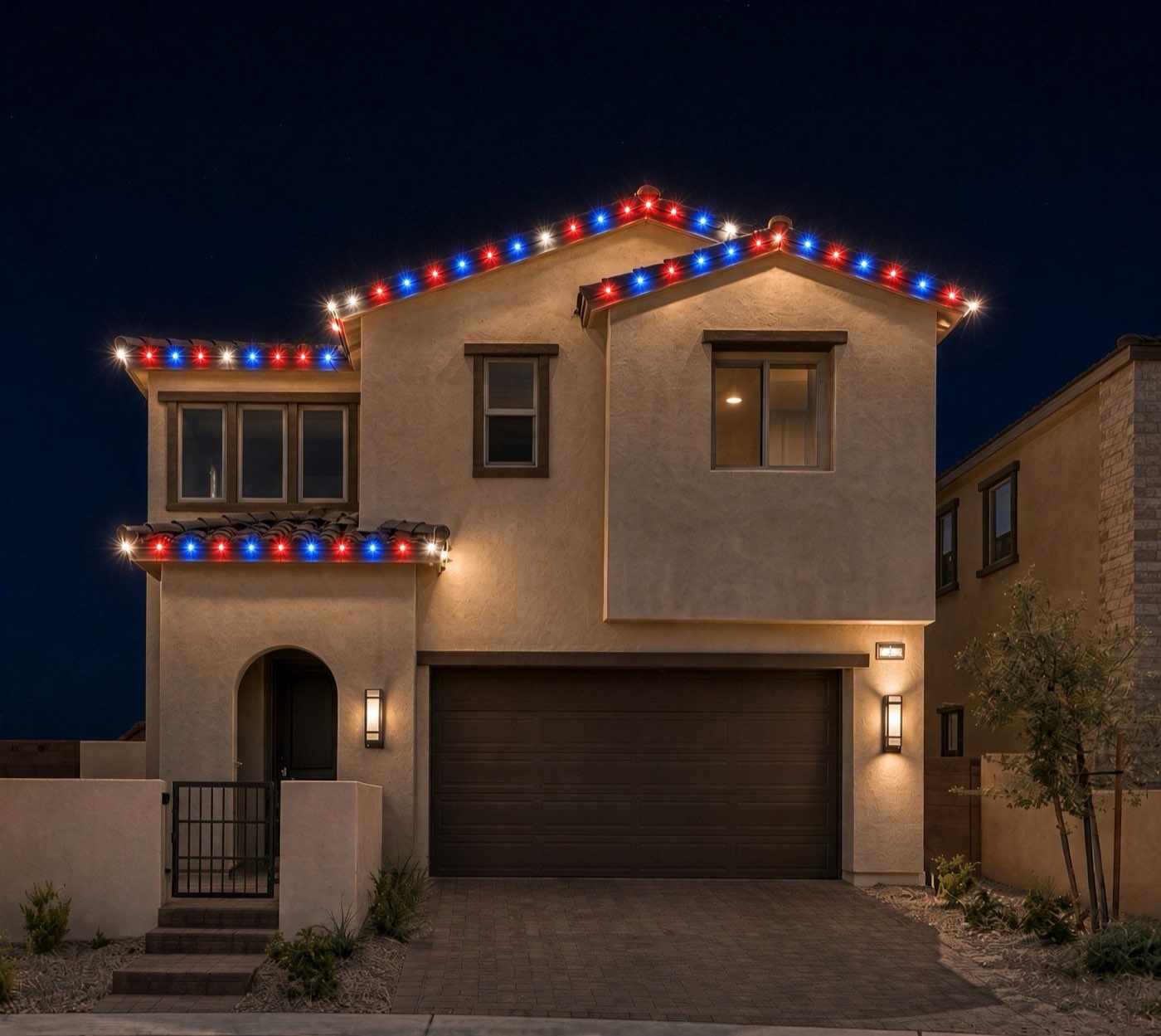
Permanent holiday lighting is a set of RGB LED lights mounted in a low-profile track along your roofline. The track usually sits on the fascia or just under the roof edge, so it blends in during the day. At night you pick colors, patterns, and schedules from an app. Common systems include Trimlight, JellyFish, Gemstone, Oelo, and EverLights, plus DIY kits such as Govee.
Holiday lights that stay up on tile-roof and stucco homes, ready every December without a ladder.
Learn moreSoft warm-white trim lighting for long desert evenings, patios, and an easier-to-find front door.
Learn moreSunset schedules, game-night scenes, and zone control from your phone, with the electronics kept out of the heat.
Learn moreScenes for Golden Knights nights, Raiders and UNLV football, Nevada Day, and every holiday in between.
Learn moreHang-and-remove holiday lighting for homeowners who are not ready for a permanent track.
Learn moreSee what permanent lights cost in Las Vegas Valley and estimate your own roofline in 30 seconds.
See pricingEvery installer we match you with clears each bar, so you're talking to a company that does quality work and stands behind it.
Active state license where required, plus general liability insurance. You can verify both before you sign.
Strong recent reviews from real local homeowners, not stale ratings from years ago.
Clear written warranty terms on LEDs, controller, and workmanship, plus a local service process.
If an installer's reviews slip or their paperwork lapses, we stop sending them homeowners until it's fixed.
Answer four quick questions for a ballpark range. A local installer will measure exactly.
Ballpark only: estimated roofline × $18–$35/ft, the installed range published by major brands. Installers measure your actual roofline for free.
Pricing is by the linear foot of roofline. Here are typical 2026 ranges for professionally installed systems.
Read the full cost guideThe Las Vegas Valley is hot, dry, and sunny. Highs above 110°F are common in July, and the official all-time record of 120°F was set at Harry Reid International Airport on July 7, 2024. Roof edges and dark fascia can get hotter than the air temperature, and strong UV breaks down plastics, sealants, and cable jackets over time.
Summer monsoon storms add sudden wind, blowing dust, and short bursts of heavy rain. Winter nights can drop near freezing. A roofline system here needs to handle wide temperature swings, sun exposure, dust, and the occasional downpour, so it is worth asking installers specific questions before you sign.
Summers here regularly top 110°F and UV is intense most of the year. Heat and UV ratings matter more here than in milder climates.
Most valley homes have concrete tile roofs and stucco exteriors. A good install mounts to the fascia or trim without cracking tile or leaving unsealed holes.
Much of the valley sits inside master-planned communities with design guidelines. Many associations expect you to submit exterior lighting for review before work starts.
Here's what working with a vetted local installer looks like.
Sixty seconds online. Use the calculator first if you want a ballpark.
A vetted local installer reaches out, often with a satellite measurement of your roofline.
Choose runs, track color, and features. Get a written, line-item quote with no obligation.
Most homes are done in one day, with schedules set and an app walkthrough before the crew leaves.
Pick your city for local notes on homes, HOAs, and what to ask installers.
Independent, brand-neutral answers before you talk to an installer.
Why permanent roofline lights fall outside most HOA holiday rules, what boards tend to regulate, and how to propose a fair guideline if your community has none.
Read guideWhat 110°F summers and desert sun do to roofline lighting, and the questions to ask before you buy.
Read guideA step-by-step look at the architectural review process in Las Vegas master-planned communities, and how to prepare a strong submittal.
Read guideHow the major systems are sold here, and the heat, tile, and service questions to ask each one.
Read guideHow tile, stucco, height, and heat decide whether a DIY kit or a pro install fits your home.
Read guideHow tile roofs, two-story homes, and desert storage change the classic lights vs. permanent decision.
Read guideQuality systems are designed for outdoor use, but desert heat and UV are tougher than most climates. Ask for the rated operating temperature, the UV stability of the track and lenses, and where the power supply will be mounted. Shaded, ventilated spots for the electronics help.
Usually yes, but most installers mount the track on the fascia or trim board rather than on the tile itself. Concrete tile can crack if walked on carelessly or drilled. Ask each installer how they mount on tile roofs and whether anyone will need to walk the roof.
If you live in an HOA, there is a good chance you need to submit exterior lighting for review. Rules differ by community, and some areas have both a master and a sub-association. Check your CC&Rs and design guidelines and ask your management company before scheduling.
Use the license search on the Nevada State Contractors Board (NSCB) website. Confirm the business name, license number, classification, status, and monetary limit. Also ask for proof of liability insurance.
A common national range for professional installs is about $18 to $35 per linear foot. Two-story homes, tile roofs, lots of corners, and complex stucco trim tend to push a quote higher. Get at least two itemized quotes with the footage measured.
Well-installed systems with sealed connectors are built to handle rain and wind. Problems tend to come from loose cable runs, open connections, or track that was not fastened well. Ask about IP ratings and how wiring is secured.
LEDs use far less power than old incandescent string lights, and most systems run only a few hours each evening on a schedule. Your actual use depends on the length of the run, brightness, and how long you leave them on. Ask the installer for the power supply rating.
DIY kits can work for single-story homes and smaller runs if you are comfortable on a ladder. Professional systems usually offer sturdier track, longer warranties, and an installer who handles heights, tile, and stucco. Compare warranty terms and heat ratings either way.
Tell us about your home. A vetted Las Vegas Valley installer will contact you to measure and quote. No pressure, no obligation.
Get My Quote